

A New Way to Travel
Timeline
6 weeks
Oct - Dec 2024
Role
UX Design
Service Design
Interaction Design
Tools
Figma
Photoshop
Premier Pro
Illustrator
Team
Chloe Porter (UX/UI)
Sam Lesser
(Signage/Branding)
Overview
Starline is a reinvention of the American transportation system to be accessible, reliable, and widely embraced as the preferred method of long-distance travel, integrating seamlessly with existing transit.
Why was it done?
In many parts of America, the opportunities offered by public transit are limiting and go unused. Our team’s research discovered psychological and geographic reasons that many travelers value cars, and make it difficult to adopt effective public transit in the US.
Redesign Outcomes
Digital tools
Mobile app, user flows, UI system, prototypes
Physical touchpoints
Station wayfinding, route and transit map, onboard navigational cues
Service design
User journeys, train car signage and cabin design
Environmental impact
Reduced emissions, more accessible travel, and a more connected America.
Gallery
We designed Starline to unify disconnected parts of travel into one understandable system. A single app handles trip planning and ticketing, navigation and connection between different modes of local transportation. Information follows the user throughout their journey, including their transit cards, accessibility needs, and personal preferences.


Discovery
The US is a large, separated country with limited and unreliable travel options. We aimed to provide a fast transit solution to connect major US cities efficiently, reducing the need for unsustainable air and private vehicle travel.
Limited routes and infrequent services make current options almost impossible to use
Mostly everything is built around highways, deprioritizing transit and forcing car ownership
67% of Americans reported being likely to use high-speed trains if they were available today
Individuals who cannot drive or afford personal vehicles would benefit from accessible transit
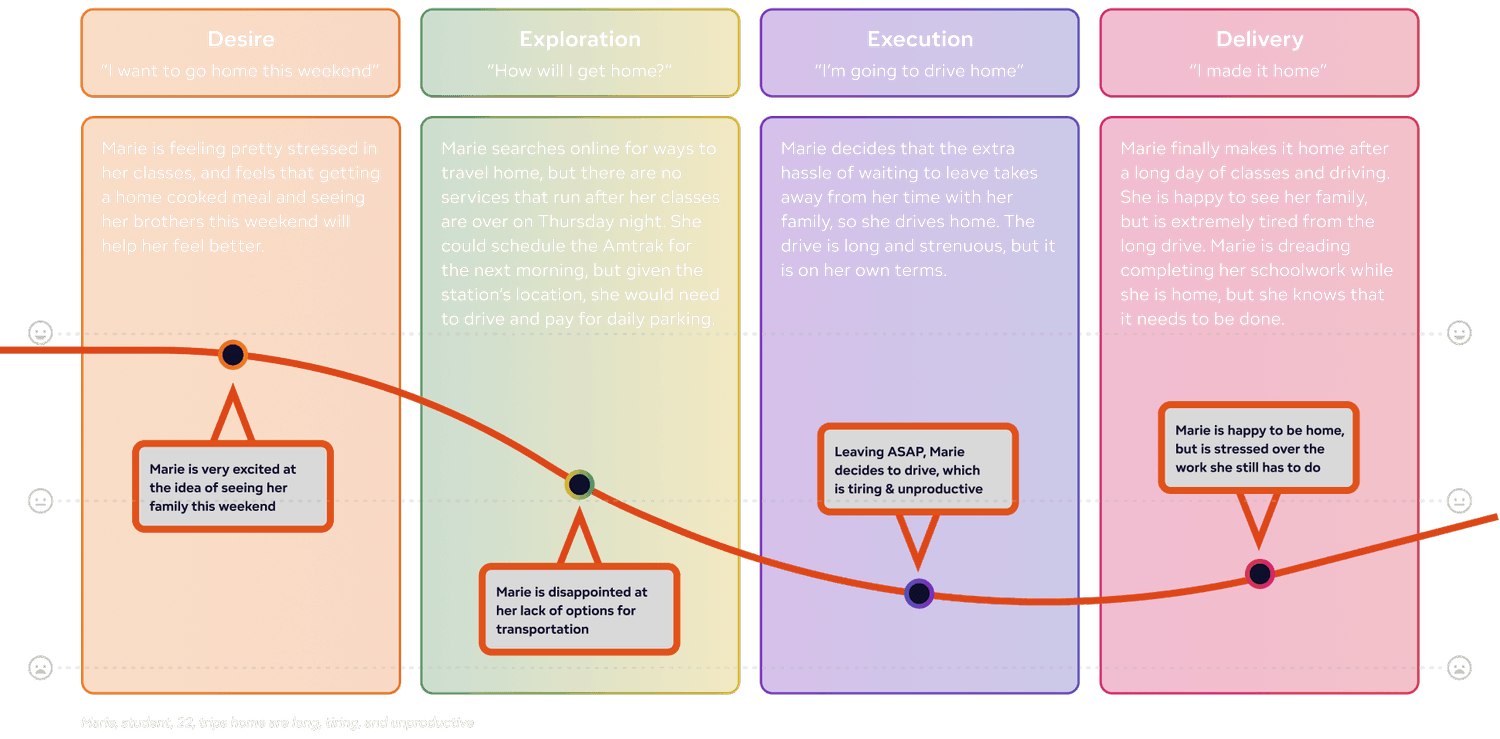
User Journeys
It’s what people are familiar with, and the default method of transportation when people are simply ready to go.
Goals and Identity
Speed
Starline utilizes maglev technology for a frictionless and fast experience, and detaching passenger transfer cars for a non-stop journey.
Accessibility
Sustainability
Reliability
Starline runs frequently and consistently, allowing passengers peace of mind. Line schedules are the same every day. Research shows the more trains are available, the more they will be used.


The Starline App
Function first
A lot of time was spent at whiteboards, brainstorming in the early stages to map out the task flow and use cases for the Starline app. By getting the function and heavy thinking laid out first, it was easy to catch problems early on and reroute before designing the interface.


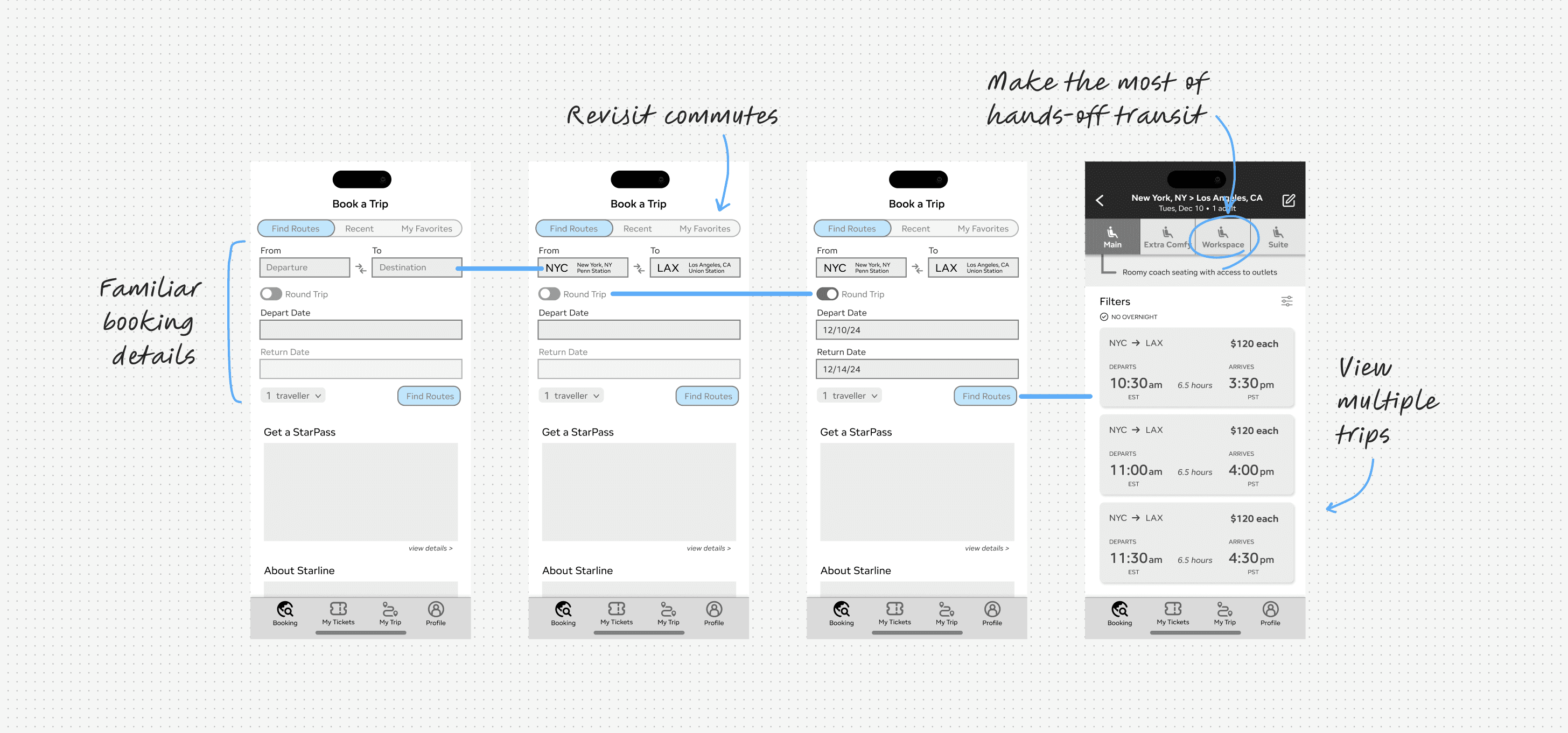
Mid-Fidelity Wireflows
Setting up an integrated account
We used these early wireframes to visually represent the features of an onboarding flow that make Starline different. In this case, the connections between types of transit, and journey-wide preferences.


These screens were used to help visualize the placement of elements in combination with function, and work Starline’s unique features and system into a familiar booking app.
Design 1/4
Multi-Modal Transit Support
The Starline App is connected to all transit accounts available in the country, in one place. Users can enter a starting address and where they want to go and let Starline do the rest. Starline tickets are valid throughout every leg of a journey, including transfers to other transit systems, so whether users hop on a bus or transfer to an Amtrak, Starline gets them where they need to be.


Reflections
Service design shapes the digital product
Starline taught me that interfaces need to map to the big-picture experience, and support the greater service design. By mapping the entire travel experience first, we implemented key steps of the journey to the mobile app where is was the most supportive and effective tool.
Designing to be preferred
Starline taught me that even if a product improves user’s lives, real people have to want to use it in the first place. Our preliminary research showed that many people choose cars, even if they might prefer public transit, because driving is so familiar and easy to manage. Addressing behavior challenged me to think beyond individual touchpoints to design a complete ecosystem.
Looking to read more?


